 Deutsch
 Ελληνικά
 Dansk
 Nederlands
 Svenska
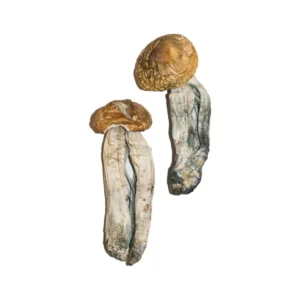
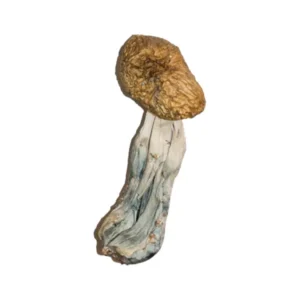
Buy Blue Meanie Magic Mushrooms Online
Blue Meanie Magic Mushrooms are a named Psilocybe cubensis variety recognised for their golden-caramel caps, pale stems and characteristic blue-grey bruising. Their memorable name and distinctive appearance have made them a familiar subject in specialist mushroom collections.
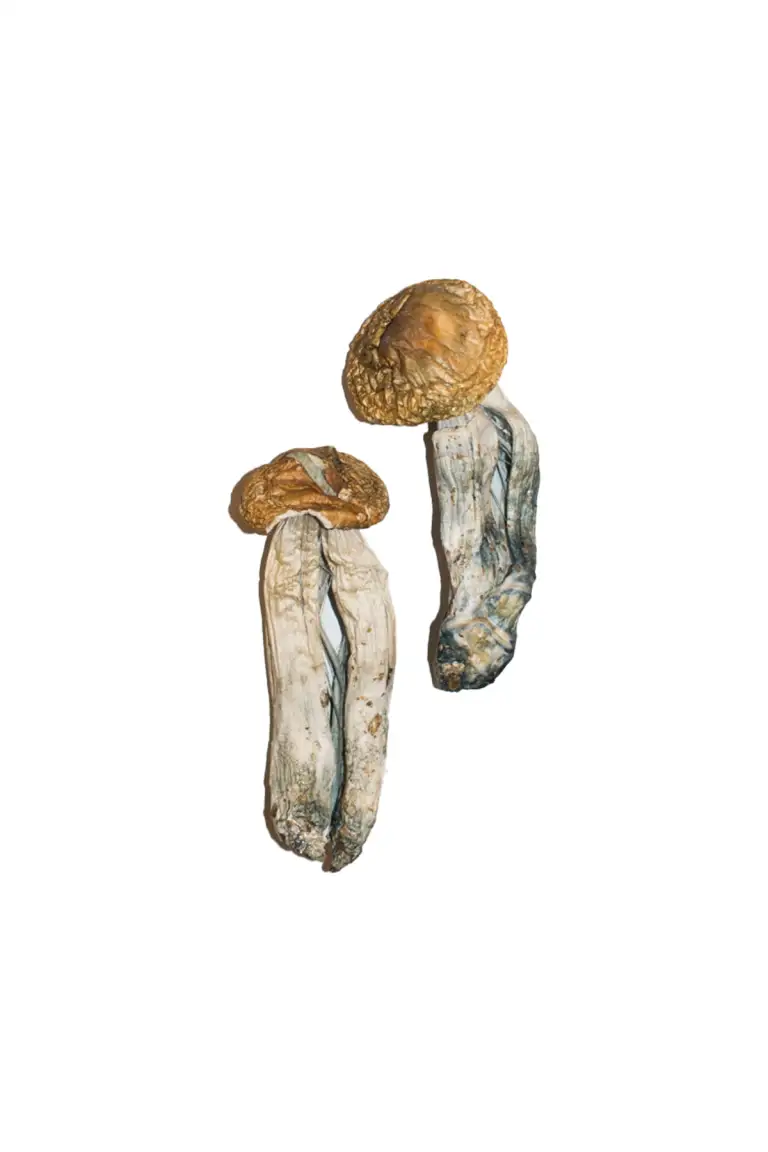
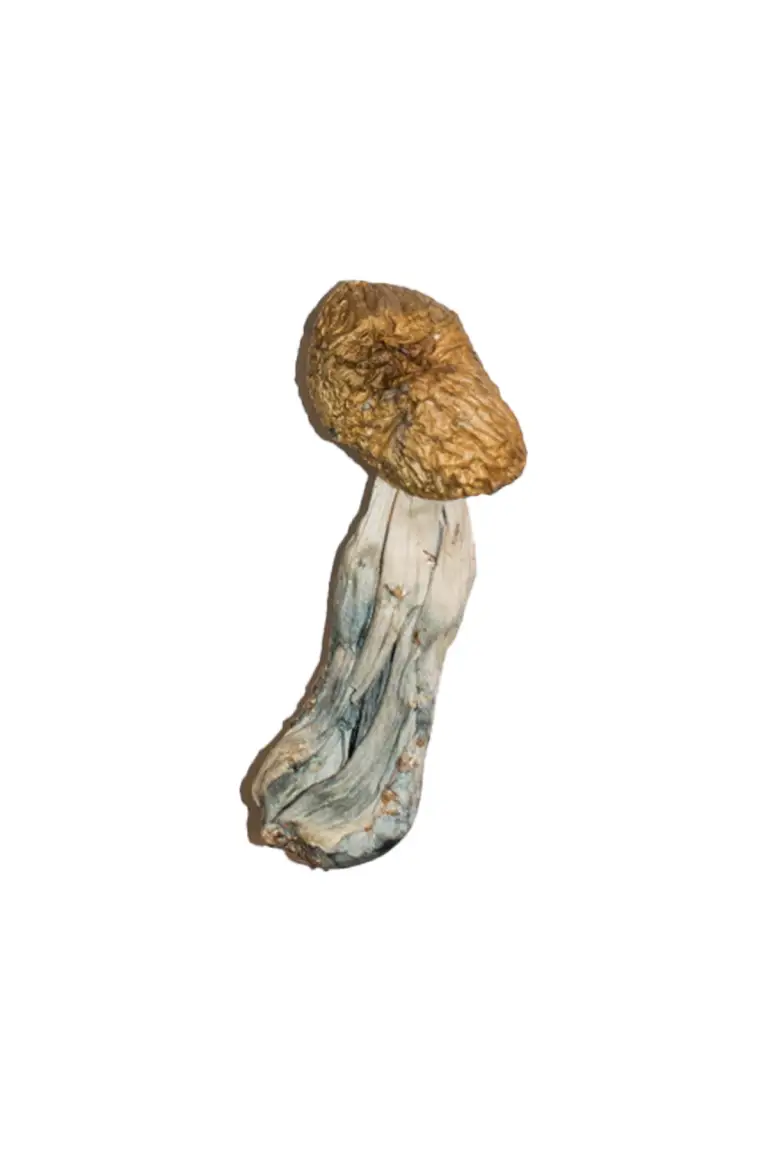
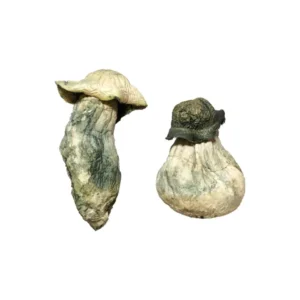
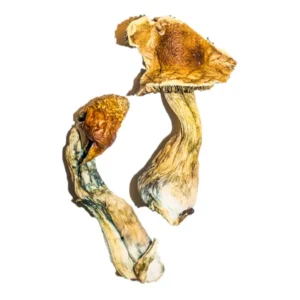
In dried form, Blue Meanie cubensis mushrooms develop folded brown caps, fibrous stems and irregular natural shapes. Some specimens retain visible blue-grey discolouration, creating an interesting contrast with their warmer cap colouring.
The Distinctive Appearance of Dried Blue Meanies
Blue Meanie cubensis mushrooms generally have the familiar proportions of Psilocybe cubensis, with rounded caps supported by pale stems.
Drying changes their original appearance in several noticeable ways:
- Caps: Golden-brown to caramel, sometimes darker around the centre, with folded or wrinkled surfaces.
- Stems: Cream to beige, becoming lightweight and fibrous after drying.
- Discolouration: Blue-grey marks may appear on damaged tissue.
- Natural variation: Individual specimens differ in size, shape and the extent of visible bruising.
Although blue bruising is closely associated with the Blue Meanie name, it is not exclusive to this variety and cannot reliably indicate chemical potency.
Why Are They Called Blue Meanies?
The Blue Meanie name has an unusual history in mycology.
It has long been associated with Panaeolus cyanescens, a separate mushroom species. Over time, the same name also became attached to a cultivated Psilocybe cubensis variety.
As a result, two biologically different mushrooms may appear under almost identical commercial names.
The cubensis variety is generally associated with golden-brown caps and relatively substantial stems, whereas Panaeolus cyanescens typically has smaller, paler caps and more delicate proportions.
These descriptions are not sufficient to authenticate dried specimens. Accurate species identification requires appropriate documentation or laboratory examination.
Blue Meanie Cubensis and Panaeolus cyanescens
Understanding the distinction between these mushrooms is especially important when reviewing product information.
| Characteristic | Blue Meanie Cubensis | Blue Meanie Panaeolus |
|---|---|---|
| Scientific species | Psilocybe cubensis | Panaeolus cyanescens |
| Name classification | Commercial variety | Common name for a species |
| Typical caps | Golden-brown to caramel | Pale grey to tan |
| Typical stems | Relatively substantial | Slender and delicate |
| Spore-print colour | Purple-brown | Black |
| Dried appearance | Folded brown caps, fibrous stems | Generally smaller, delicate specimens |
The two should not be treated as interchangeable products.
Natural Compounds and Colour Variation
Psilocybe cubensis naturally produces psilocybin and psilocin.
Blue-grey bruising is associated with chemical reactions involving psilocybin-related compounds, but the colour or intensity of bruising does not provide a dependable measure of concentration.
Dried specimens can vary chemically, even when they share the same commercial variety name. Laboratory testing of the actual material is necessary to establish its chemical profile.
Blue Meanie Magic Mushrooms: Product Overview
| Characteristic | Details |
|---|---|
| Product name | Blue Meanie Magic Mushrooms |
| Product form | Dried mushrooms |
| Scientific species covered | Psilocybe cubensis |
| Commercial variety | Blue Meanie |
| Typical dried cap colour | Golden-brown to caramel |
| Typical dried stems | Pale, fibrous |
| Notable appearance | Possible blue-grey bruising |
| Naturally occurring compounds | Psilocybin and psilocin |
| Important distinction | Not the same species as Panaeolus cyanescens |
| Verified potency | Requires batch-specific analysis |
A Recognisable Name with an Important Distinction
Blue Meanie Magic Mushrooms stand out through their memorable name, traditional cubensis appearance and association with blue bruising.
In dried form, their brown caps, pale stems and natural colour variations give them a recognisable presentation. Their shared name with Panaeolus cyanescens also makes accurate scientific classification particularly important.
For mycological collections and documentation, the Blue Meanie designation is most useful when accompanied by a verified species identification and reliable information about the individual material.
| qtr | 1/2 Ounce, 1/2 Pound, 1/4 Pound, One Ounce, One Pound |
|---|
Be the first to review “Big Mex Magic Mushrooms”
Related products
Psilocybin Mushroom
Psilocybin Mushroom
Psilocybin Mushroom
Psilocybin Mushroom
Psilocybin Mushroom
Psilocybin Mushroom
Psilocybin Mushroom
High-Quality B+ Magic Mushrooms Online – Psychedelic Dispensary
Psilocybin Mushroom
Reviews
There are no reviews yet.