
 Deutsch
 Ελληνικά
 Dansk
 Nederlands
 Svenska
Brazilian Magic Mushrooms
Brazilian Magic Mushrooms are a named Psilocybe cubensis variety associated with the rich fungal biodiversity of South America. Recognised for their classic golden-brown caps, pale stems and natural mushroom appearance, the Brazilian variety carries a distinctive geographical identity within the wider cubensis family.
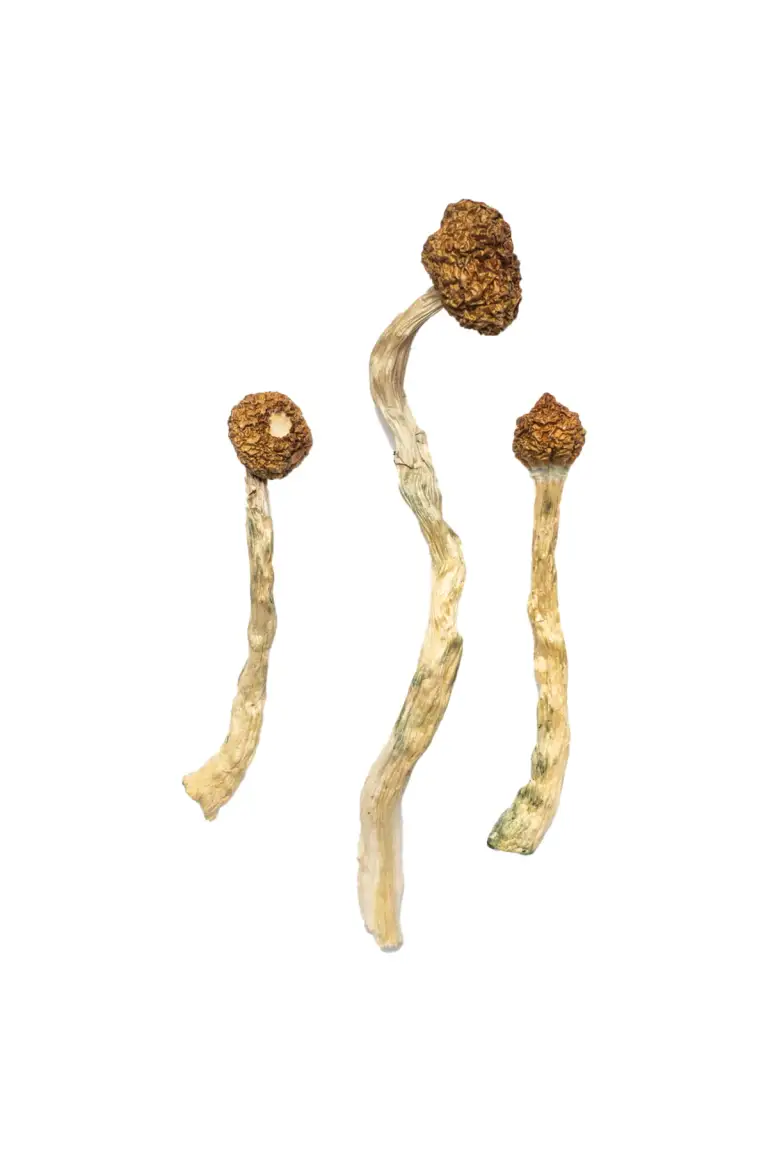
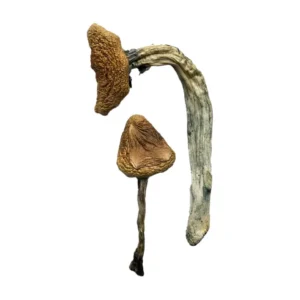
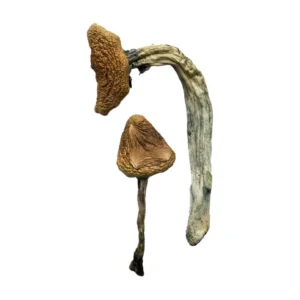
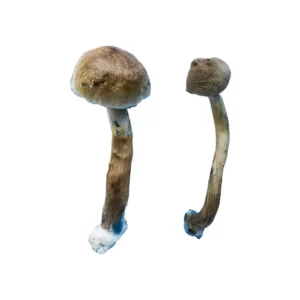
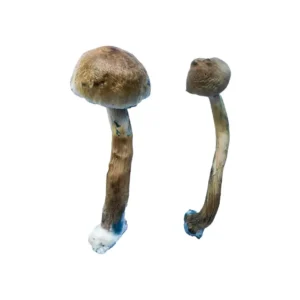
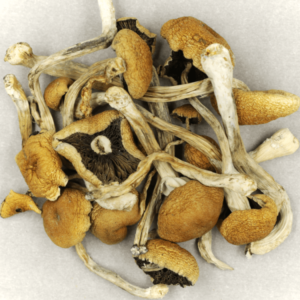
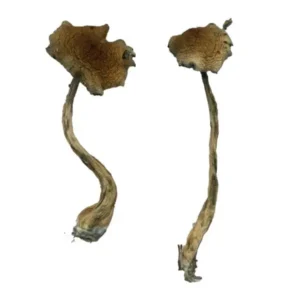
In dried form, these mushrooms display warm caramel and tan colouring, folded caps and lightweight, fibrous stems. Their naturally varied shapes give each specimen an individual appearance, reflecting the characteristics of preserved Psilocybe cubensis.
Dried Brazilian Magic Mushrooms: Appearance and Characteristics
The Brazilian variety is generally associated with the familiar golden-capped appearance of Psilocybe cubensis.
As the mushrooms dry, their caps may become wrinkled or curled, developing shades ranging from light golden brown to deeper amber. The stems become pale, firm and fibrous, sometimes retaining curved or irregular proportions.
Typical characteristics of dried specimens include:
- Caps: Golden-brown, tan or caramel-coloured, with naturally folded surfaces.
- Stems: Cream to beige, lightweight and fibrous.
- Texture: Dry and relatively delicate, particularly around the cap edges.
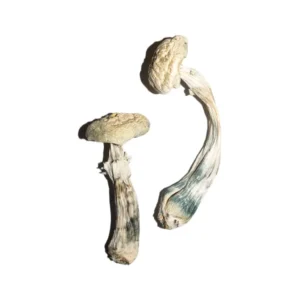
- Natural variation: Differences in cap diameter, stem proportions and occasional blue-grey discolouration.
These features are representative of dried cubensis mushrooms and are not exclusive to the Brazilian designation.
The Brazilian Connection
Brazil provides an important geographical context for this variety.
The country’s tropical and subtropical environments support a diverse range of fungi, including naturally occurring Psilocybe cubensis. Scientific surveys have documented the species in Brazil, including in the northeastern state of Pernambuco.
The commercial Brazilian lineage is associated with this broader South American setting, although its precise original collection site and genetic ancestry are not conclusively documented.
This geographical background distinguishes the Brazilian name from Southeast Asian varieties such as Cambodian and Burmese, as well as Mexican-associated lineages such as Mazatapec.
Brazilian Compared with Other Cubensis Varieties
Brazilian belongs to the same species as Golden Teacher, B+ and Ecuadorian mushrooms.
All may share similar golden-brown caps and pale stems, particularly after drying. Their commercial names primarily reflect different reported histories, geographical associations or cultivation selections.
The Brazilian designation does not, by itself, establish a unique chemical profile or genetically distinct population.
Its strongest identifying characteristic is its South American association rather than an independently verified difference in potency.
Natural Composition
Psilocybe cubensis is known to contain psilocybin and psilocin, naturally occurring psychoactive compounds.
Their concentrations can vary between individual specimens. Research also indicates that commercial cubensis lineages may share close genetic relationships despite having different names.
For dried Brazilian mushrooms, neither cap colour nor commercial designation provides a reliable measure of chemical strength. Material-specific laboratory analysis is necessary to establish compound concentrations.
Brazilian Magic Mushrooms: Product Overview
| Characteristic | Details |
|---|---|
| Product name | Brazilian Magic Mushrooms |
| Product form | Dried mushrooms |
| Scientific species | Psilocybe cubensis |
| Commercial designation | Brazilian |
| Geographical association | Brazil, South America |
| Typical dried cap colour | Golden-brown to caramel |
| Typical dried stem appearance | Pale, fibrous and sometimes curved |
| Naturally occurring compounds | Psilocybin and psilocin |
| Verified lineage ancestry | Not conclusively established |
| Batch-specific chemical profile | Requires laboratory analysis |
A Recognisable South American Cubensis Variety
Brazilian Magic Mushrooms bring a South American geographical identity to the familiar appearance of dried Psilocybe cubensis.
Their golden-brown caps, pale fibrous stems and naturally irregular presentation reflect the characteristics of preserved cubensis specimens, while their Brazilian association connects them to a region with documented fungal diversity.
The Brazilian name remains a recognisable designation within specialist mycology, offering geographical and historical context for the study of this widely distributed mushroom species.
Be the first to review “Brazilian Magic Mushrooms”
Related products
Psilocybin Mushroom
Psilocybin Mushroom
Psilocybin Mushroom
Psilocybin Mushroom
Psilocybin Mushroom
Psilocybin Mushroom
Psilocybin Mushroom
Psilocybin Mushroom
Reviews
There are no reviews yet.